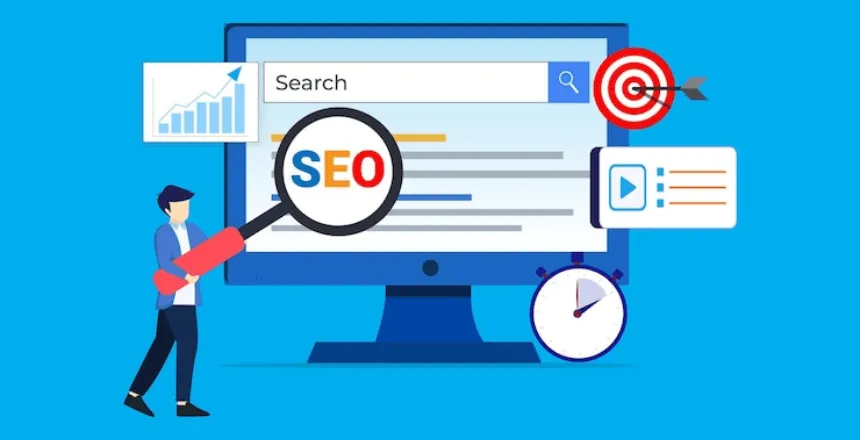
Search engine optimization, better known as SEO, is one of the most important digital marketing strategies for websites that want to attract visitors from search engines. Whether you operate a personal blog, business website, online store, news publication, or niche website, SEO can help your pages become more visible when people search for information, products, services, or solutions.
Blogging has always had an important relationship with SEO because regularly publishing useful content gives websites more opportunities to appear in search results. However, successful SEO is about much more than simply publishing large numbers of articles. Modern search optimization involves technical performance, content quality, relevance, user experience, authority, internal linking, and understanding what people are actually searching for.
What Is SEO?
SEO stands for Search Engine Optimization.
It is the process of improving a website so that search engines can better understand its content and users can more easily discover it through organic search results.
Search engines such as Google use automated systems to discover, crawl, interpret, and rank web pages.
When someone searches for something, the search engine attempts to provide results that are useful and relevant to that particular query.
SEO helps website owners communicate more effectively with search engines while also improving the experience for visitors.
SEO can involve many different areas, including:
- technical SEO
- on-page SEO
- content optimization
- internal linking
- structured data
- website performance
- mobile optimization
- local SEO
- international SEO
- digital PR
- link acquisition
- user experience
Why Search Traffic Matters
Search engines can be an important source of highly targeted visitors.
Someone searching for:
“how to start a vegetable garden”
has already demonstrated interest in that subject.
Someone searching for:
“best WordPress hosting for small business”
may have strong commercial intent.
This makes organic search traffic particularly valuable for businesses and publishers.
Unlike some forms of advertising, SEO can continue generating visitors after the original content has been published.
A well-performing article can potentially attract organic traffic for months or years.
The Relationship Between Blogging and SEO
Blogging provides websites with a practical way to continuously create useful, searchable content.
A static website might have pages such as:
- Home
- About
- Services
- Contact
A blog can add dozens, hundreds, or thousands of additional pages covering specific questions and topics.
Each useful article can represent another opportunity to appear in search results.
For example, a website selling gardening products could publish articles about:
- growing tomatoes
- growing chili peppers
- organic gardening
- composting
- watering vegetables
- pest management
- seed starting
- greenhouse gardening
Instead of relying only on a product page to attract search traffic, the website can build a much broader topical presence.
Blogging Creates More Search Opportunities
One of the biggest SEO advantages of blogging is the ability to target many different search queries.
A single service page may target one primary topic.
A blog can cover hundreds of related questions.
For example, an SEO agency might have a primary service page targeting:
SEO services
Its blog could then cover related searches such as:
what is SEO
how does SEO work
how to improve website rankings
technical SEO checklist
what is local SEO
how to optimize a website for Google
These articles can attract visitors at different stages of the search journey.
Search Intent Is More Important Than Keywords Alone
Modern SEO is not simply about inserting keywords into articles.
Search engines attempt to understand what the user actually wants.
This is known as search intent.
A person searching for “what is WordPress” probably wants an explanation.
Someone searching for “WordPress hosting price” is more likely researching a purchase.
Someone searching for “WordPress login” may simply want to access a website.
A successful blog should therefore create content that matches the intent behind the search.
The goal is not merely to rank for a keyword.
The goal is to satisfy the user who searched for it.
Blogging and Topical Authority
A website can strengthen its topical relevance by creating comprehensive coverage of a subject.
For example, a website about SEO could publish content covering:
SEO basics
→ What is SEO?
→ How search engines work
→ Keyword research
→ On-page SEO
Technical SEO
→ Website speed
→ Core Web Vitals
→ Mobile SEO
→ Structured data
Off-page SEO
→ Link building
→ Digital PR
→ Brand mentions
Local SEO
→ Google Business Profile
→ Local citations
→ Local search optimization
These interconnected articles create a much stronger topical structure than publishing unrelated content.
Internal Linking
Blogging also creates opportunities for internal linking.
Internal links connect pages within the same website.
For example, an article about keyword research can link to another article about on-page SEO, which can link to a guide about technical SEO.
This helps users discover related information and helps search engines understand relationships between pages.
A well-planned internal linking structure can turn a collection of individual articles into a coherent information architecture.
Blogging and Long-Tail Keywords
Blogs are particularly useful for targeting long-tail keywords.
Long-tail searches are usually more specific and often contain several words.
Examples include:
- best free WordPress blog hosting for beginners
- how to optimize a WordPress blog for SEO
- how to grow organic tomatoes in containers
- best Linux distribution for an old laptop
Individual long-tail queries may have relatively low search volume, but thousands of such queries can collectively generate substantial traffic.
This is one reason niche blogging can work even without ranking for extremely competitive keywords.
Fresh Content and Content Updates
Blogging also creates opportunities to keep a website active and improve existing content.
However, publishing something new does not automatically give it an SEO advantage.
The quality and usefulness of the content matter.
Sometimes updating an existing article is more valuable than publishing another new article.
An older article can be improved by:
- adding new information
- correcting outdated facts
- improving structure
- adding useful examples
- updating statistics
- improving internal links
- removing obsolete information
SEO is therefore not only about creating new content.
It is also about maintaining the quality of existing content.
Blogging and Backlinks
High-quality blog content can also help attract backlinks.
If an article contains original research, useful statistics, a unique guide, an interesting study, or a valuable resource, other websites may naturally reference it.
These editorial links can contribute to a website’s authority and discoverability.
However, creating content purely to manufacture backlinks can lead to low-quality results.
The better approach is to create resources that people genuinely want to reference.
Blogging and Brand Authority
SEO is increasingly connected with brand recognition.
When users repeatedly encounter the same website across relevant searches, the website can become more familiar to them.
A strong blog can help establish a business as a knowledgeable source within its industry.
For example, a company selling cybersecurity products could publish detailed educational material about security.
Over time, readers may begin associating that company with cybersecurity expertise.
This can influence both organic search performance and direct business results.
Blogging Is Not the Same as SEO
It is important to understand that blogging alone does not equal SEO.
A website can publish hundreds of articles and still perform poorly in search engines.
SEO requires a broader strategy.
A successful website may need:
- technically sound architecture
- fast performance
- mobile compatibility
- crawlable pages
- useful content
- clear site structure
- strong internal linking
- appropriate metadata
- authoritative references
- quality backlinks
- good user experience
Blogging is therefore one component of SEO rather than a replacement for SEO.
The Importance of Quality
The internet contains enormous amounts of content.
Publishing another generic article is not necessarily enough to compete.
A successful blog should attempt to provide something genuinely useful.
That could be:
- original research
- practical experience
- expert knowledge
- unique data
- detailed tutorials
- original images
- case studies
- useful tools
- comprehensive explanations
The more difficult the information is to reproduce, the more valuable the content can potentially become.
SEO and AI Search
Search is changing rapidly as artificial intelligence becomes integrated into search engines and other information systems.
Users increasingly receive synthesized answers instead of simply browsing traditional lists of links.
This makes original and trustworthy content increasingly important.
Bloggers should therefore think beyond traditional keyword optimization.
Content should be:
- accurate
- useful
- clearly structured
- original
- well researched
- written for humans
- supported by appropriate evidence
Strong content can potentially serve both traditional search engines and emerging AI-powered discovery systems.
Blogging and SEO for Businesses
Businesses can use blogging to attract potential customers at different stages of the buying journey.
For example, a hosting company could publish:
Informational content
“What is web hosting?”
Problem-solving content
“How to speed up a WordPress website”
Comparison content
“SSD hosting vs HDD hosting”
Commercial content
“Best hosting for WordPress websites”
Each type of content can attract a different type of visitor.
Some readers may be learning.
Others may be comparing solutions.
Some may already be ready to purchase.
This makes blogging a powerful component of a broader content marketing funnel.
Blogging and Local SEO
Blogging can also support local SEO.
A local business can create useful content related to its geographical area.
A Dubrovnik tourism business, for example, could publish articles about local attractions, transportation, seasonal activities, travel advice, and other topics relevant to visitors.
This creates additional opportunities to appear for geographically relevant searches while providing useful information to potential customers.
The Future of Blogging and SEO
Blogging is unlikely to disappear, but the way bloggers approach SEO will continue changing.
Search engines are becoming better at understanding context, entities, intent, relationships, and content quality.
At the same time, AI is making it easier to produce large quantities of text.
This means publishing volume alone is becoming a weaker competitive advantage.
Successful blogs will increasingly need to differentiate themselves through expertise, originality, trust, firsthand experience, and genuinely useful resources.
Conclusion
SEO and blogging have been closely connected since the early development of modern search and content publishing.
Blogging provides a website with opportunities to create useful content, target long-tail searches, build topical authority, attract backlinks, strengthen internal linking, and reach people at different stages of the search journey.
However, blogging should not be treated as a shortcut to Google rankings.
Publishing hundreds of low-quality articles will not automatically create a successful SEO strategy.
The strongest approach is to combine high-quality blogging with technical SEO, search intent research, internal linking, strong website architecture, authoritative content, and a good user experience.
A blog is ultimately more than a collection of articles. When properly planned, it can become a long-term organic traffic engine that continuously attracts people searching for answers, information, products, and services.
And that is where the real relationship between blogging and SEO becomes powerful: blogging gives a website more opportunities to be discovered, while SEO helps those opportunities reach the right audience.